Loading
Back to writing
Building BorrowLah: Our Journey Through the SDP Hackathon
2 min read
When we started working on BorrowLah for the Sime Darby Property Hackathon, we kept coming back to a simple thought: many useful things already exist within a neighbourhood, but it is not always easy for neighbours to share them.
Someone might need a pressure washer for just one afternoon. Someone else might have spare plant pots they no longer use. These small situations gave us a starting point for BorrowLah: borrow before buying, pass things on before throwing them away, and recycle together.
Turning an idea into a working app
As we developed the project, we had to think beyond putting items on a screen. If two residents arrange a loan, how do they know when the item has been handed over or returned? What would make the process clear for both people?
We built a borrowing journey where residents can find an item, request dates, and confirm the handover and return. This became one of the main parts of our prototype.
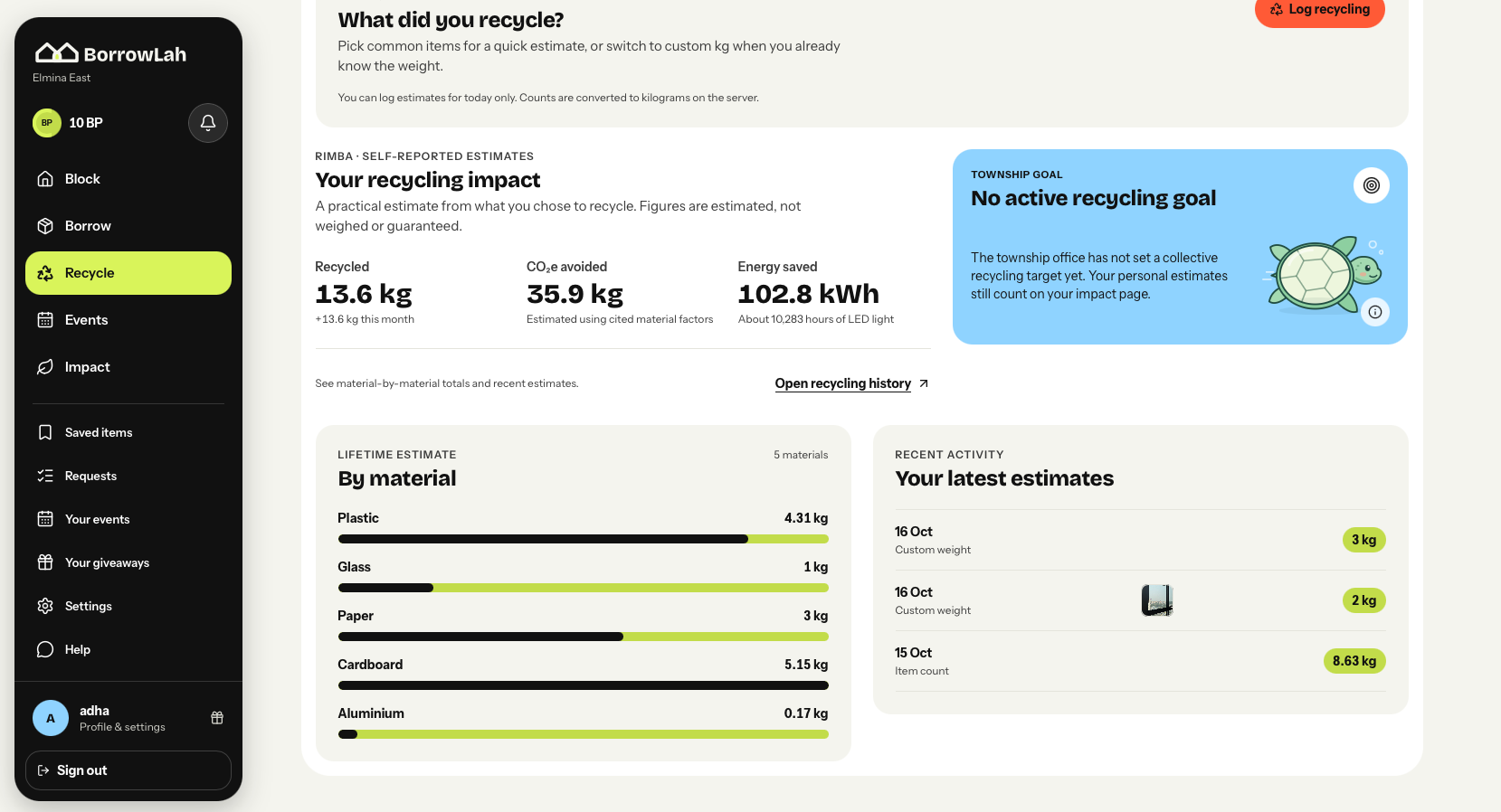
We also explored what Reduce, Reuse and Recycle could look like in everyday township life. Alongside borrowing, we added giveaways, neighbourhood events and recycling logs. Residents can see a breakdown of what they recorded, while the app makes clear that recycling weights and impact figures are self-reported estimates.
What this Journey taught us
Building BorrowLah made us pay attention to the steps between wanting to participate and actually completing an action. A borrowing request needs a clear outcome. Rewards should be tied to eligible, verified activity. Township managers need useful overall information while resident details are handled carefully.
By the end of this stage of the hackathon, we had built and locally tested a working prototype. We also prepared an interactive preview with sample data so judges could explore the idea.
That is a result we are proud of, but it is still a prototype. We have not yet run a resident pilot or measured environmental impact. The next step is to learn whether residents would use BorrowLah regularly and whether a township team could manage it in practice.
For us, BorrowLah became more than an idea about sharing objects. It became a way to ask how a township could make it easier for neighbours to share more, connect more and live better.
#hackathon#sime Darby property